
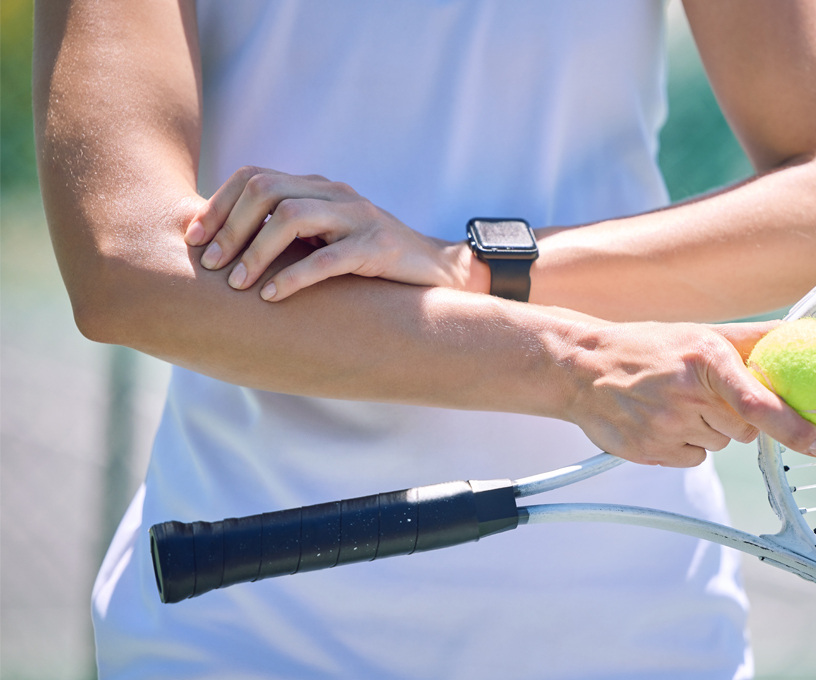
Why Racquet Sports Frequently Cause Elbow and Forearm Injuries
At Shockwave Body and Solutions we treat forearm and elbo injuries at out locations in Manhattan and Philadelphia. Tennis, squash, racquetball, paddle tennis, pickleball, and padel continue to grow in popularity among athletes of all ages. These sports provide outstanding cardiovascular exercise, improve coordination, and offer tremendous social benefits. However, they also place significant repetitive stress on the elbow, wrist, and forearm.
Whether you are a competitive player or a weekend enthusiast, repetitive gripping, serving, backhands, volleys, and powerful racquet swings can create microscopic damage within the tendons that attach to the elbow. Over time, these small injuries can accumulate and eventually develop into chronic pain that interferes with both sports performance and everyday activities.
At Shockwave Body Solutions, we frequently evaluate athletes suffering from tennis elbow, golfer’s elbow, forearm tendinitis, wrist pain, and chronic overuse injuries related to racquet sports. Many patients have already tried rest, anti-inflammatory medications, braces, physical therapy, and injections without achieving lasting relief.
Our goal at Shockwave Body Solutions is to help patients restore function, stimulate healing, reduce pain, and return to the sports they love without surgery whenever possible.
Common Racquet Sport Injuries Affecting the Elbow and Forearm
Tennis Elbow (Lateral Epicondylitis)
Despite its name, tennis elbow is not limited to tennis players.
It commonly affects:
- Tennis players
- Squash players
- Racquetball players
- Pickleball players
- Padel athletes
- Golfers
- Weightlifters
The condition involves degeneration of the extensor tendons that attach to the outside of the elbow.
Symptoms often include:
- Pain on the outer elbow
- Pain with gripping
- Weakness during racquet swings
- Difficulty lifting objects
- Pain shaking hands
- Reduced racquet control
Tennis elbow is one of the most extensively studied applications of shockwave therapy.
Golfer’s Elbow (Medial Epicondylitis)
Golfer’s elbow affects the tendons on the inside portion of the elbow.
Although common among golfers, it frequently develops in racquet sport athletes due to repetitive gripping and wrist flexion.
Symptoms include:
- Inner elbow pain
- Forearm tightness
- Pain with gripping
- Reduced power during serves and forehand strokes
- Weakness during activity
Forearm Tendinitis
Repeated racquet swings create substantial stress throughout the forearm muscles and tendons.
Overuse may lead to:
- Tendon irritation
- Microtears
- Chronic inflammation
- Tendon degeneration
- Muscle tightness
Patients often experience aching pain throughout the forearm that worsens with activity.
Wrist Extensor Tendinopathy
The muscles controlling wrist extension originate near the elbow and extend through the forearm.
These structures are heavily involved in:
- Backhand shots
- Volley control
- Grip stabilization
- Racquet acceleration
Overuse can lead to persistent pain and weakness.
Flexor-Pronator Tendon Injuries
Powerful serves and forehand strokes place significant stress on the flexor-pronator muscle group.
Athletes may develop:
- Medial elbow pain
- Forearm discomfort
- Reduced grip strength
- Loss of performance
Why These Injuries Become Chronic
Many athletes initially assume their symptoms will improve with a few weeks of rest.
Unfortunately, tendon injuries often behave differently than muscle injuries.
Limited Blood Supply
Tendons naturally receive less circulation than muscle tissue.
This limits delivery of:
- Oxygen
- Nutrients
- Healing factors
- Repair cells
As a result, healing can be slow.
Repetitive Stress
Even after symptoms develop, many players continue:
- Practicing
- Competing
- Training
- Working
The ongoing stress may exceed the body’s ability to repair damaged tissue.
Tendon Degeneration
Many chronic elbow injuries involve tendinosis rather than inflammation alone.
These degenerative changes include:
- Disorganized collagen fibers
- Microscopic tearing
- Scar tissue formation
- Reduced elasticity
- Poor tissue quality
This explains why some patients continue experiencing symptoms despite medications and rest.
How Elbow Injuries Affect Performance
Athletes frequently notice:
Reduced Grip Strength
Difficulty controlling the racquet.
Loss of Power
Reduced force generation during serves and groundstrokes.
Pain During Competition
Symptoms worsen during prolonged matches.
Difficulty Practicing
Training volume becomes limited.
Reduced Confidence
Fear of pain often alters mechanics and performance.
Left untreated, chronic elbow injuries can significantly impact athletic performance and enjoyment of sport.
Traditional Treatment Options
Many athletes initially pursue conservative therapies.
These commonly include:
Activity Modification
Reducing playing volume.
Physical Therapy
Improving flexibility, strength, and biomechanics.
Bracing
Counterforce braces may reduce tendon loading.
Anti-Inflammatory Medications
Temporary symptom management.
Cortisone Injections
May provide short-term relief but do not stimulate tendon healing.
PRP Injections
Designed to stimulate tissue repair in select cases.
Surgery
Reserved for severe chronic injuries.
Despite these treatments, some athletes continue experiencing persistent symptoms.
How Shockwave Therapy May Help
Shockwave therapy uses acoustic energy to stimulate biological healing mechanisms within damaged tendons.
Rather than simply masking symptoms, treatment is designed to encourage tissue repair and regeneration.
At Shockwave Body Solutions, shockwave therapy is used as part of a personalized treatment strategy for chronic tendon injuries affecting the elbow and forearm.
Potential Biological Benefits of Shockwave Therapy
Research suggests shockwave therapy may promote:
Increased Blood Flow
Improved circulation may enhance tissue healing.
Growth Factor Activation
Biological signaling pathways involved in repair may be stimulated.
Collagen Remodeling
Encourages healthier tendon structure and organization.
Reduction of Chronic Pain
May influence pain pathways and reduce chronic tendon irritation.
Tissue Regeneration
Supports the body’s natural healing response.
Conditions Commonly Treated
Shockwave therapy may be considered for:
- Tennis elbow
- Golfer’s elbow
- Forearm tendinitis
- Chronic tendon injuries
- Wrist extensor tendinopathy
- Flexor tendon injuries
- Overuse injuries
- Racquet sport injuries
- Pickleball injuries
- Padel injuries
- Squash injuries
- Racquetball injuries
- Sports-related elbow pain
Why Racquet Sport Athletes Seek Shockwave Therapy
Athletes often seek treatment because they want to:
- Avoid surgery
- Continue playing
- Improve performance
- Reduce pain
- Recover faster
- Improve grip strength
- Return to competition
- Restore confidence
Many patients appreciate that treatment is non-invasive and requires minimal downtime.
Prevention Tips for Tennis Elbow and Forearm Injuries
Athletes can reduce risk by:
- Using proper technique
- Maintaining racquet grip size
- Replacing worn strings
- Gradually increasing playing volume
- Performing forearm strengthening exercises
- Stretching regularly
- Addressing symptoms early
Early intervention often prevents progression to chronic injury.
Why Athletes Choose Shockwave Body Solutions
Athletes throughout Manhattan, Riverdale, Bala Cynwyd, Philadelphia, and the Main Line choose Shockwave Body Solutions because we provide:
- Concierge-level care
- Personalized treatment plans
- Advanced shockwave therapy
- Affordable self-pay options
- No referral required
- Sports medicine-focused evaluations
At Shockwave Body Solutions, our mission is to help athletes return to activity, restore function, stimulate healing, and reduce pain without surgery whenever possible.
Frequently Asked Questions
Is shockwave therapy painful?
Most patients tolerate treatment well. Treatment settings can be adjusted for comfort.
How many treatments are typically recommended?
Most treatment plans involve three to six sessions depending on the severity and duration of symptoms.
Can I continue playing sports?
Many athletes continue modified activity during treatment, although recommendations vary based on the injury.
How soon do results occur?
Many patients begin noticing improvement within several weeks, while tissue healing may continue for several months.
Is tennis elbow the most common racquet sport injury?
Yes. Tennis elbow remains one of the most frequently diagnosed overuse injuries among racquet sport athletes.
Serving Manhattan, Bronx, Brooklyn, Bala Cynwyd, Philadelphia, and the Main Line
Shockwave Body Solutions proudly serves patients throughout:
- Manhattan
- Midtown Manhattan
- Upper East Side
- Upper West Side
- Chelsea
- SoHo
- Tribeca
- Riverdale
- Bala Cynwyd
- Philadelphia
- Bryn Mawr
- Ardmore
- Wynnewood
- Narberth
- King of Prussia
- Main Line communities
Whether you are struggling with tennis elbow, golfer’s elbow, forearm tendinitis, racquetball injuries, squash injuries, pickleball injuries, or chronic overuse conditions, our goal is to help you get back on the court safely and confidently.
Learn More
Visit:
Schedule directly: